You know the brand of your biggest competitor. But do you know its CEO? If so, it’s probably because someone made the choice to show them. And what if that someone were you?
Why a face changes everything
A logo doesn’t smile, doesn’t doubt, doesn’t get enthusiastic. A leader does. Faced with two comparable companies, clients, candidates and partners trust the one they can picture. Showing who makes the decisions answers a question everyone silently asks: “who am I dealing with?”
This also applies to recruitment: a candidate who has already seen your CEO speak arrives at the interview with an idea of the company’s mindset. Our article on employer branding on video develops this point.
Where to show up
- LinkedIn: the natural ground for a leader. A polished profile photo, short to-camera videos, behind-the-scenes of a project. See the video formats that work.
- The company website: a portrait and a short welcome message humanise the “about” page.
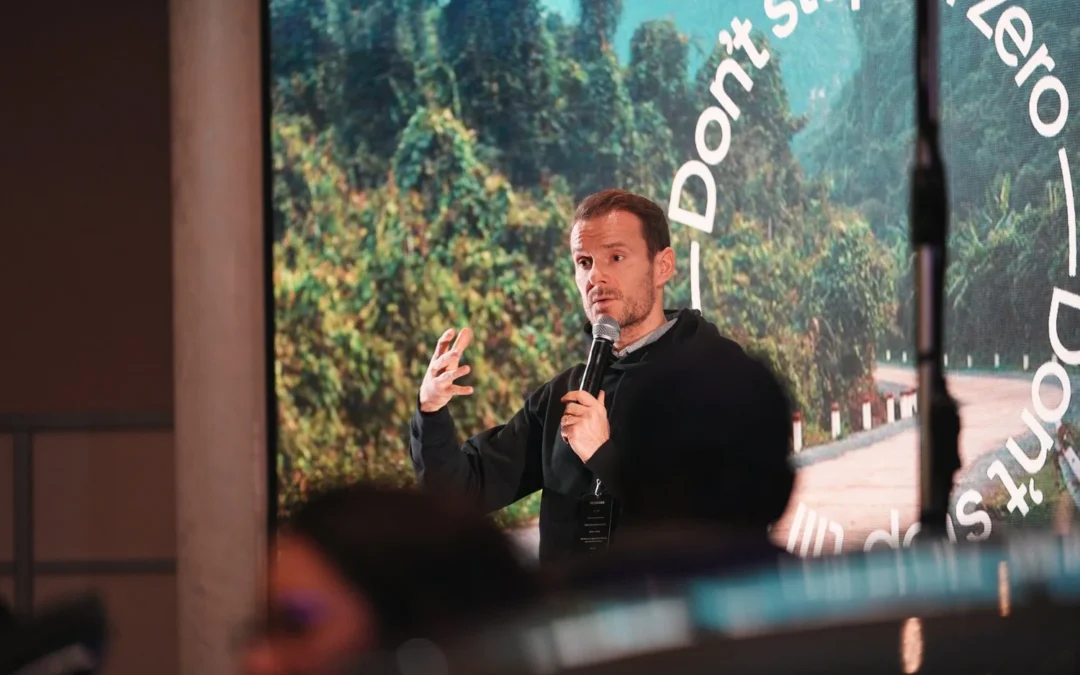
- Key moments: trade shows, openings, award ceremonies. A filmed speech is worth ten press releases.
- The press and partners: a good portrait gets reused again and again.
The portrait: the foundation
A good portrait of a leader is neither an ID photo nor a magazine pose. It shows someone real, in a place that suits them: their workshop, their office, their field. Plan two or three outfits, a plain background for formal uses, and more natural images, in action, for social media. Our advice on corporate portraits will help you prepare them.
Speaking up without betraying yourself
Authenticity isn’t about saying everything, it’s about telling the truth. Talk about what you know: a difficult decision, a lesson learned, a client who changed your mind. You don’t need to be an orator, just to be clear. One message, one idea, short sentences.
The audience forgives an “um”. It doesn’t forgive a speech that rings false.
What pace should you keep?
Consistency matters more than intensity. Better one post a month, kept up for a year, than ten in September and then nothing. Decide on a rhythm you can really follow, then shoot in batches: half a day of shooting can provide several months of speaking content. That is the logic behind your 12-month editorial calendar.
Preparation, without learning it by heart
- Write down three ideas, not a script. For example: the problem, what you did, what it changes.
- Say them out loud to someone, before shooting.
- Keep notes visible off-camera, but don’t read them.
- Redo the same take several times: the second is often the right one.
- Drink some water, breathe, smile before you start.
To go further on this point, see our guide to succeeding at a filmed interview.
What not to do
| Avoid | Instead |
|---|---|
| Reading a text word for word | Start from three ideas and speak naturally |
| Advertising yourself | Tell a problem, a decision, a lesson |
| Copying another leader’s tone | Keep your own vocabulary and rhythm |
| Posting in bursts, then disappearing | Choose a sustainable pace |
| Hiding behind jargon | Speak as you would to a client |
| Forgetting the team | Mention, show and thank those who do the work |
Tip Start with a subject where you feel comfortable: presenting a project, thanking a team, explaining a choice. Confidence comes with practice.
Showing yourself is not an ego exercise, it’s a service to those who need to trust you. All it takes is good preparation, a comfortable setting and someone who knows how to put you at ease.
At that dog, we often shoot portraits and speeches for business leaders: we take the time to put you at ease, set up flattering light without artifice, and capture what is true to you. A well-run session can provide both photos and videos for several months.
Ready to step in front of the camera?
We prepare the session with you and put you at ease, for portraits and speeches that are true to you.