Your best brand film has just been watched by a prospect in Munich. He didn’t understand a word. He politely closed the tab, and you never knew.
Communicating internationally doesn’t mean redoing all your communication. It means choosing the right adaptation method, and shooting from the start with other languages in mind.
Four ways to adapt a video
| Method | Principle | Relative cost | Best for |
|---|---|---|---|
| Subtitles | The original voice stays, the text is translated | Lightest | Interviews, testimonials, social media |
| Voice-over | A translated voice is laid over the original, which stays in the background | Mid-range | Short interviews, documentaries |
| Dubbing | The original voice is replaced by an actor or a synthetic voice | Highest | Brand films, advertising, training |
| Version shot in the language | You reshoot with local speakers | Variable, often the highest | Strategic markets |
No prices here: it all depends on the duration, the number of languages and the level of quality. The principle to remember: the further the adaptation goes, the more natural the result feels, and the higher the bill climbs.
What AI can do in 2026, and its limits
Automatic translation and dubbing really do exist, and are progressing fast. A few verified benchmarks:
- YouTube offers automatic dubbing in more than 30 languages, for videos under 120 minutes that contain speech. The video is labelled as automatically dubbed, and the creator can review it before publishing. Lip sync exists on an experimental basis for some channels.
- Vimeo advertises translated audio in 29 languages and subtitles in 36 languages, with voice cloning of the speaker, and the option to have the transcript corrected by a human.
The limits, for their part, are documented: YouTube itself warns that dubs may contain errors, particularly with background noise, accents, proper names and figures of speech. Your product name pronounced the French way, or an untranslatable joke, won’t land well. AI is excellent for informative content and market tests. For a brand film or an ad, a review by someone who genuinely speaks the language remains essential.
Tip Have each version reviewed by a native speaker from your industry, not just by a translator. They will spot what sounds off, what raises a smile, or what is simply clumsy.
A recent rule to know about
At European level, the transparency obligations of Article 50 of the AI Act have applied since 2 August 2026. They notably require informing the public when content is a “deepfake” (an image, voice or video generated or altered by AI that resembles a real person). A cloned voice used to make your CEO speak a language they don’t speak may fall within this scope. Exceptions exist, for example for evidently artistic, creative or fictional works. If in doubt: state clearly that the version was dubbed by AI, and obtain written consent from the person whose voice is being cloned.
Shoot with export in mind
The most effective work happens before the shoot. A few habits that save you from redoing everything:
- No text burned into the image: titles, figures, names and taglines must be changeable. Text “engraved” in the shots is a linguistic prison.
- Plan shots without speech: gestures, products, places, atmosphere. They can be edited identically in every version and leave room for the longer text of some languages, such as German.
- Record clean sound: a voice without noise or music is much easier to translate, dub or redo.
- Provide a music file separate from the voice: you can then replace the voice without touching the atmosphere.
- Keep imagery neutral: a gesture, a colour or a place may not mean the same thing elsewhere.
Cultural adaptation, the forgotten part
Translating is not adapting. Very French humour, a reference to a local event, an example of a price or a regulation: all of this may mean nothing to the target audience. Sometimes a simple change of opening shot or example is enough. And check the conventions too: formal or informal address, the way people introduce themselves, the place of humour all change from one country to another.
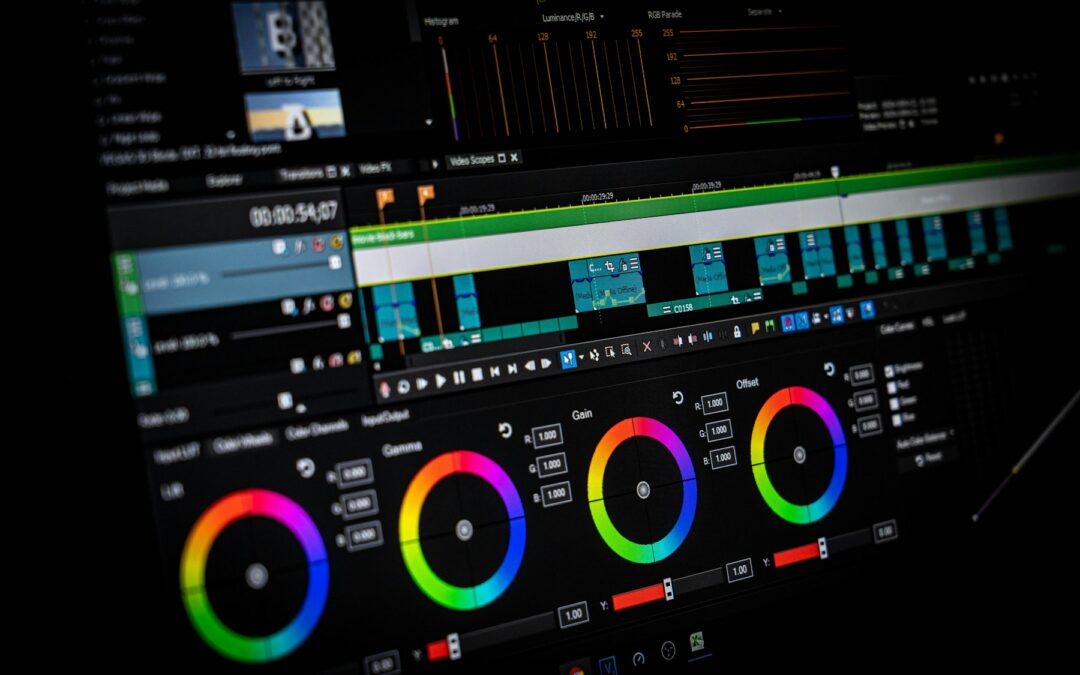
At that dog, we prepare your shoots with this logic: reusable shots, clean sound, text added in post-production in DaVinci Resolve and sound crafted in Pro Tools. The result: your future language versions cost less.
Going further
- YouTube Help: using automatic dubbing
- Vimeo: AI-powered video translation
- European Commission: guidelines on the transparency of AI-generated content
This article offers general guidance and does not replace legal advice.
A video designed for several languages
Let’s talk about your next shoot, so that your international versions are simple to produce.