
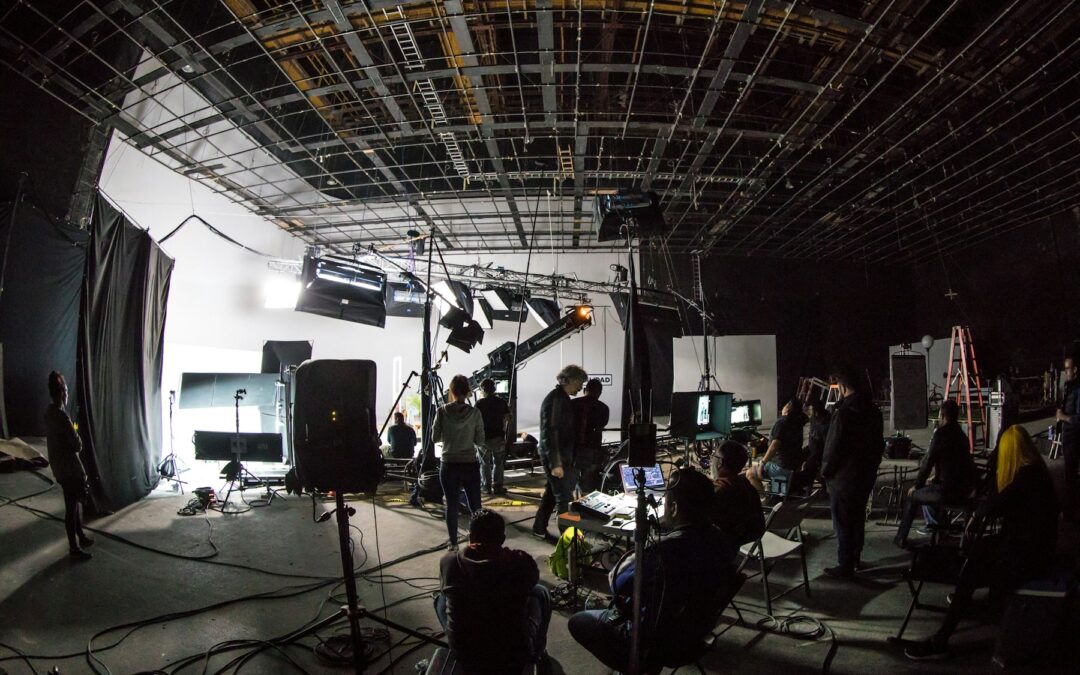
You have probably felt it before: some videos instantly inspire trust, while others look amateur within the first few seconds, and it isn’t always easy to say why. Behind that impression lie precise technical choices. Here is what really makes the difference.
Light, the invisible element
It is often what separates a professional image from an ordinary one. Well-placed light sculpts a face, brings out a texture, creates a mood. LED tubes, powerful spotlights, softboxes: each tool has its role.
Sound, the ultimate test
Audiences will forgive an average image, but rarely poor sound. Lavalier mics, boom mics, control of the location’s acoustics, then mixing in post-production: clear sound is essential for the message to come across.
The image: camera and lenses
Cinema cameras offer an exposure latitude and a color rendering that make the difference, especially for color grading. Lenses also play a key role: background blur, the way faces are rendered, the character of the image.
Movement
A smooth shot gently moving toward a subject, a camera rising above a scene, a tracking shot along a production line: slider, stabilizer, crane or car suction mount give the image dynamism and a cinematic dimension.
Post-production
- editing, which sets the rhythm and builds the story;
- color grading, which creates the visual identity and color harmony;
- mixing, which balances voices, music and ambient sound;
- motion graphics and branding, which bring in your graphic identity.
Technique goes unnoticed when it is done well. That is precisely how you recognize it.
Equipment at the service of the project
None of this makes sense unless the equipment suits the project: there is no point deploying a crane for an interview, but some shots are impossible without one. To discover the tools we use, from the RED V-Raptor camera to our Astera lights, visit the page our equipment.
Cinema quality for your images
Let’s talk about your project: we size the crew and equipment precisely to your needs.