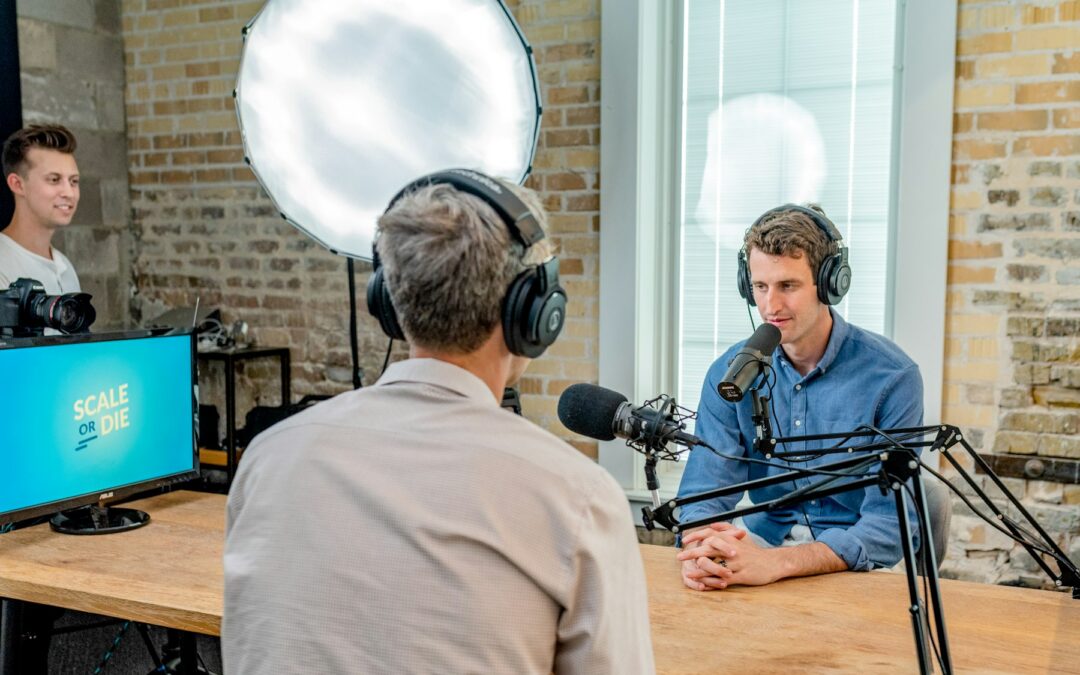
Two people, two microphones, a table, and sixty minutes of conversation. On paper, nothing could be simpler. Yet this format has taken hold on YouTube, in the living room, on the phone, and more and more in corporate communication. Let’s look at why, and what it takes to make it look professional.
A trend, with numbers
The video podcast, or vodcast, is a podcast you watch as much as you listen to it. Here is what recent sources say:
- YouTube reports more than one billion monthly viewers of podcast content.
- Again according to YouTube, podcasts totaled 700 million hours watched on TV in October 2025, up from 400 million a year earlier.
- In the United States, Edison Research’s “Podcast Consumer 2026” study indicates that 37% of weekly consumers use YouTube first for podcasts, ahead of Spotify. Among those who have ever listened to a podcast, 57% do so by listening and watching.
A useful caveat: these figures mostly describe the global and US markets. We have no comparable French measurement to cite, but the trend is the same on the platforms your customers use.
What is it for, for a company?
1. Showing your expertise
An hour of conversation says more than a brochure. An executive or expert explaining their job proves their competence without seeming to boast.
2. Producing short clips
This is the most concrete argument. A one-hour episode yields plenty of vertical clips for Instagram, LinkedIn, TikTok or YouTube Shorts. A single shoot thus feeds several weeks of posts.
3. Creating a regular appointment
One episode a month is a habit for your audience and an excuse to invite customers, partners or employees.
What it takes for a professional result
| Element | Why | What you get |
|---|---|---|
| Multiple cameras | Alternating wide shots and close-ups of each person | Rhythm, without abrupt cuts |
| Careful sound | It’s the first thing people notice | Clear voices, no echo or hiss |
| Crafted lighting | Flattering faces, crisp image | A TV look, not a webcam look |
| A chosen set | It tells the story of your world | A recognizable identity |
Multi-camera. One camera on each person, plus a wide shot. In the edit, we alternate according to who is speaking: the eye never gets bored.
Sound first. Lavalier or stand microphones, placed as close as possible, make the difference. The final mix, which balances the voices, is done in post-production.
Lighting. Soft, directed light on the faces, with sources adjusted to the mood of the set, avoids harsh shadows and tired-looking faces.
The set. Two armchairs and a white wall is not a set. A few elements related to your trade (objects, materials, plants, products) create an identity visible from the very first image.
Tip Shoot a wide shot framed in the center, so you can extract vertical versions without losing sharpness.
Six concept ideas
- “The expert answers”: someone from the company answers real customer questions.
- “Behind the job”: an employee talks about their day and their tough moments.
- “The customer tells”: a customer looks back on their project, with sincerity.
- “The industry roundtable”: three players from the same sector debate a topical subject.
- “Decoded”: a regulatory or technical subject explained simply.
- “The new hires”: young employees talk about their arrival, useful for employer branding.
Two precautions
- Prepare without scripting. A list of questions and a common thread are enough. The energy of live conversation is the charm of the format.
- Get your guests’ agreement. Anyone filmed must give written permission to use their image.
At that dog, we film multi-camera with a cinema camera and carefully chosen lenses, we light with Astera LED tubes, COB lights and softboxes, and we mix the sound with Pro Tools. The goal: a warm, professional look, and a stack of vertical clips ready to publish the day after the shoot. You can also see our equipment in detail.
What if your expertise went on screen?
Let’s talk about your video podcast concept: set, guests, rhythm and clips for social media.