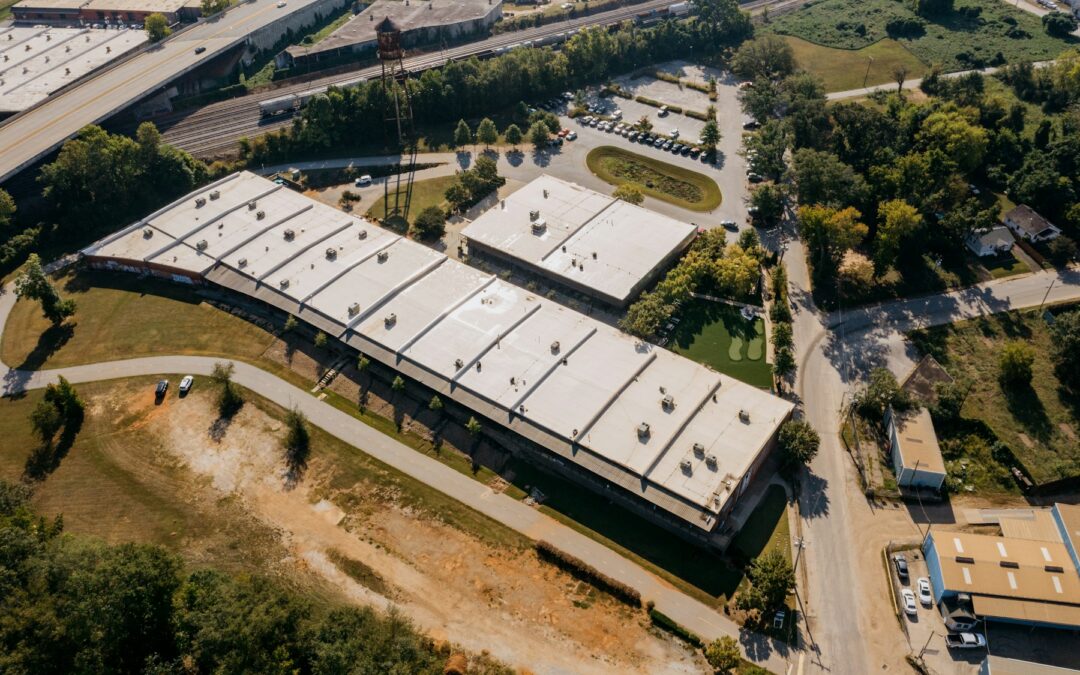
A drone above your company’s façade, a beautiful wide shot of the production site: the image is tempting. But between the sky and you, there is a set of European rules applied in France. Here is the essential, in readable form, before taking off.
Pro or hobby: what matters is the risk
Since the European regulation, “hobby” and “professional” are no longer really distinguished. It is the operation’s risk level that determines the rules. A flight for a client is therefore possible in the so-called “open” category, provided its constraints are respected. As soon as the risk goes up, you move to the “specific” category.
The two categories in a table
| Category | In plain terms | What applies |
|---|---|---|
| Open (low risk) | Light drones, visual line of sight, away from crowds | Classes C0 to C4, subcategories A1, A2, A3, online training, 120 m maximum, no night flights |
| Specific (medium risk) | More complex operations or closer to third parties | European standard scenarios STS-01 (class C5) and STS-02 (class C6), or authorization from the authorities after a risk analysis |
Open category: A1, A2, A3
- A1: the lightest drones (classes C0 and C1). Flying over people is very limited: tolerated briefly and unintentionally with a C0, accidental for a C1. Never over gatherings of people.
- A2: class C2. No flying over people, with a minimum distance to respect, shorter in low-speed mode. An additional theory exam is required.
- A3: classes C2, C3 and C4, far from built-up areas and third parties.
The basic training is done online, with a theory exam. You must be at least 14 years old. In addition, any operator of a drone weighing more than 250 g, or equipped with a camera, must register on the AlphaTango portal and display their number on the aircraft. In our line of work, the camera is therefore always in the loop.
Specific category: when filming in town or further afield
The European standard scenarios STS-01 (visual line of sight, up to 120 m, over a controlled ground area that may be inhabited) and STS-02 (flight that may go beyond the remote pilot’s line of sight, in a sparsely populated area) have applied since January 1, 2024. The old national scenarios S1, S2 and S3 have no longer been usable since January 1, 2026. The operator declares their activity, has an operations manual, and the remote pilot passes a dedicated theory certificate. Outside a scenario (night flight, greater height, for example), you must request an authorization, with a lead time to plan for.
No-fly zones: Géoportail first
Airports, sensitive sites, urban areas: some zones are closed or restricted. Checking the Géoportail restrictions map is recommended before every flight, as are local rules. Having “just five minutes of flight” exempts you from nothing.
Tip Scout your shooting location on Géoportail from the brief, not the day before. A restricted zone can tip the operation into the specific category, with authorization lead times that can’t be made up at the last minute.
Flying over people, privacy, insurance
An event, an audience, employees on a construction site: flying over people is strictly regulated, and flying over gatherings is excluded from the open category. Add to that image rights and respect for privacy: filming recognizable people or a neighboring property without consent can be costly. As for liability, the operator is held liable by operation of law for damage caused on the ground to people or property. Liability insurance suited to drone use is therefore not a detail: check what your policy covers before the flight.
Why go through a professional
- They know the category, drone class and scenario suited to your location.
- They check zones, authorizations and lead times before announcing a date.
- They handle insurance, image rights and on-site safety.
- They deliver usable, stabilized, color-graded footage in the style of your other content.
Going further
This article gives general guidance and does not replace legal advice. The rules evolve: always check the situation on the date of the flight.
- Ministère de la Transition écologique: operating drones in the open category (in French)
- Ministère de la Transition écologique: operating drones in the specific category (in French)
- European UAS transition FAQ (ministry, in French)
For a real estate film, an industrial site presentation or event coverage, the drone adds a dimension the ground can’t give. It’s prepared like the rest of a shoot: scouting, rules, weather, plan B. You’ll find concrete uses in our article on drone footage for business.
Images from the sky, without the hassle
Describe your site and your goal: we’ll tell you what is feasible, and how.