An event agency imagines, organises and brings the event to life. An image studio stages it, captures it and extends it long after the last handshake. For agencies working with demanding clients in very different sectors, relying on a photo and video studio is no longer a bonus: it is what delivers a successful event and content that keeps working afterwards.
Why photo and video have become essential for events
- The event lasts a day, the images last for months. They let you communicate before, during and after, on the website, LinkedIn, in the press and on social media.
- They prove success. A client investing in an event wants to show the atmosphere, attendance, speakers and highlights to those who were not there.
- They reach more people. A video of a few dozen seconds or a photo reportage published the same evening extends the audience far beyond the room.
- They support the review. Images and videos illustrate the report, back the budget request for the next edition and make people want to come back.
- They meet participants’ expectations. They photograph, film and share: the official image might as well be worthy of the brand.
Event agency and studio: who does what?
| Role | Responsibility | What it brings to the others |
|---|---|---|
| Event agency | Designs the setup, coordinates suppliers, keeps the schedule and the client relationship. | The programme, the running order, venue access, technical constraints. |
| End client | Sets the objectives, approves messages and brand image. | Values, visual identity, existing content. |
| Image studio (like that dog) | Designs content in advance, films and photographs on site, delivers and adapts after the event. | A consistent art direction, a light and responsive team, ready-to-publish files. |
Before the event: content designed to be shown on site
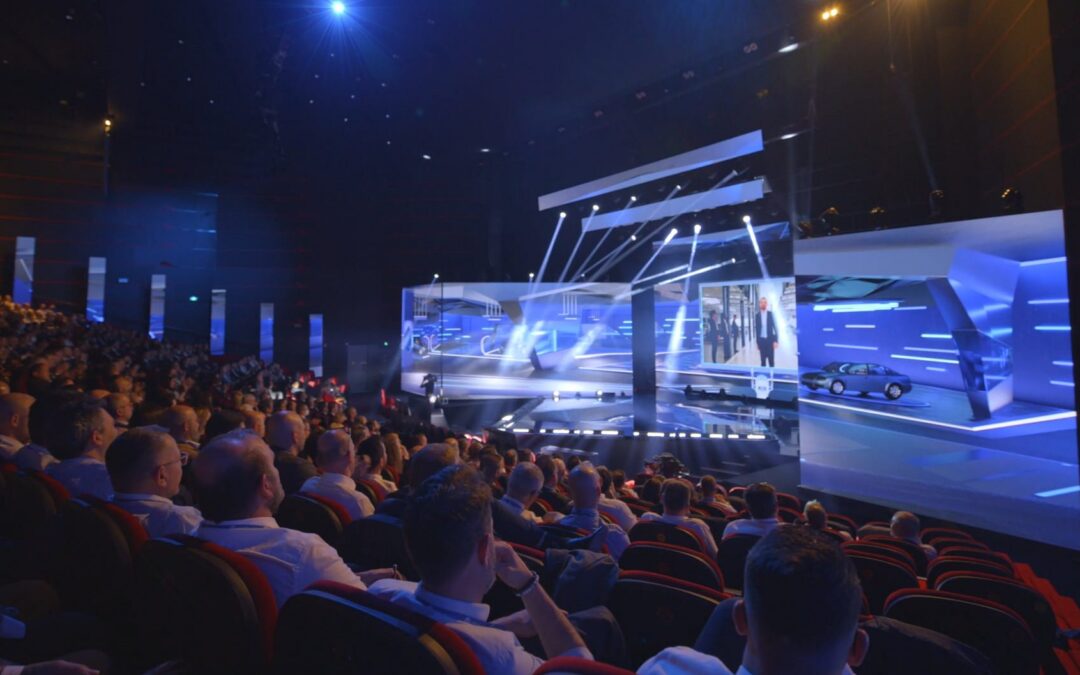
An event is not just a venue and a programme: it is also screens, key moments and speeches that need content. Producing it in advance lets you polish and approve it without pressure.
- An opening film or event title sequence, matched to the client’s identity.
- A presentation video of the brand, product or edition, shown in plenary.
- Pre-recorded interviews of executives, partners or guests who cannot attend.
- Video loops and animations for welcome screens, stands and signage.
- Sequences to pace the conferences: speaker introductions, transitions, animated key figures.
- Portraits of speakers and photos of the venue, for communication materials and invitations.
- A teaser or announcement video to encourage registrations.
During the event: what we film and photograph on site
- Photo reportage: atmosphere, welcome, speakers, exchanges between participants, decor details, with a first selection delivered the same day.
- Conference capture: one or several cameras, careful sound, live broadcast or replay.
- Quick interviews: a few questions to participants, speakers and executives, while the moment is fresh, to feed social media and the final film.
- Same-day short videos: vertical and square formats, subtitled, published during the event.
- Behind-the-scenes images: setting up, teams at work, preparation, telling the story behind the scenes.
- Aftermovie: the summary film that captures the energy of the event and is released afterwards.
After the event: extending the life of the images
- A shared photo gallery, with HD and web versions, captioned.
- The aftermovie in long version and short formats for each network.
- Conference and testimonial excerpts to publish over the following weeks.
- A content pack for the client review and the preparation of the next edition.
A collaboration in six steps
- Shared brief: objectives, targets, tone, venue and client constraints, industry.
- Scouting and technical plan: lighting, sound, camera positions, access, permits.
- Upstream production: opening films, interviews, animations, approved before the day.
- Shooting plan for the day: list of shots not to miss, accreditations, fast approval loop with the agency.
- Express delivery: photo selection the same day, first short videos within 24 hours.
- Post-production and versions: aftermovie, short formats, sorted and captioned image library.
Adapting to each sector
- Luxury, beauty, hospitality: controlled lighting, discretion, attention to detail.
- Industry, construction, energy: safety rules, suitable outfits, aerial footage possible.
- Institutional and non-profit: restraint, subtitles, accessibility.
- Tech, trade fairs and launches: pace, demonstrations, short interviews.
- Culture, sport, general public: energy, atmosphere, crowds, live broadcast.
Rights and logistics not to forget
- Inform participants that they may be photographed or filmed, with a sign at the entrance or in the invitation.
- Obtain permissions from the venue and the speakers, especially for recordings.
- Choose music with clear usage rights.
- Define image usage rights with the client: media, duration, territories.
- Announce the image team’s access and accreditations in advance.
Key takeaway
The studio does not replace the agency, it extends its work: content designed in advance to carry the event, images captured on site to tell it, versions afterwards to make it last. To go further on the role of images in communication, read our article on working with PR.
Are you an event agency looking for an image partner for your next events? Discover our corporate photography and corporate video services, or request a quote.